5 benefits of a full moisture survey
Moisture is the root driver behind many expensive failures. A structured survey makes it measurable.
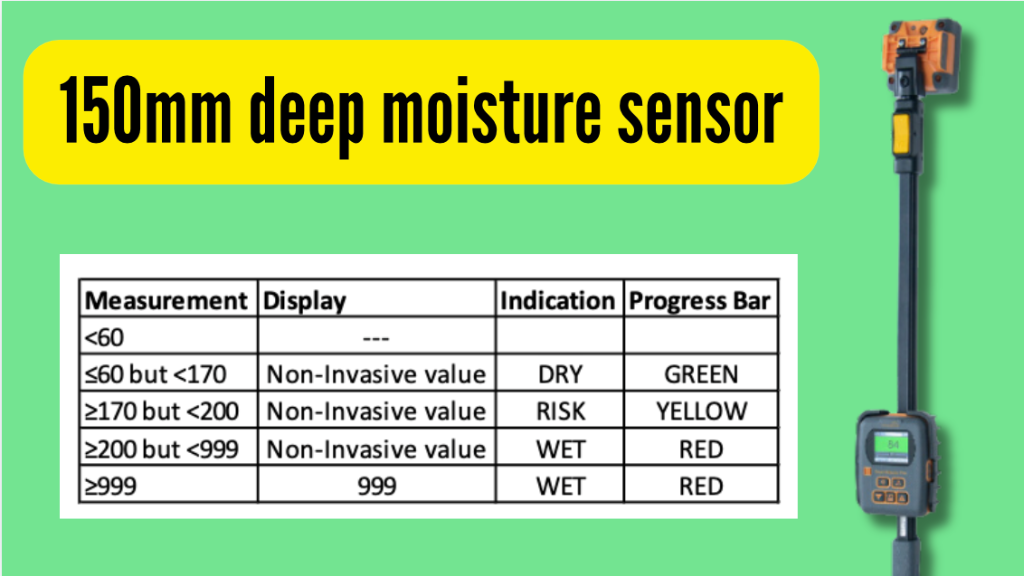
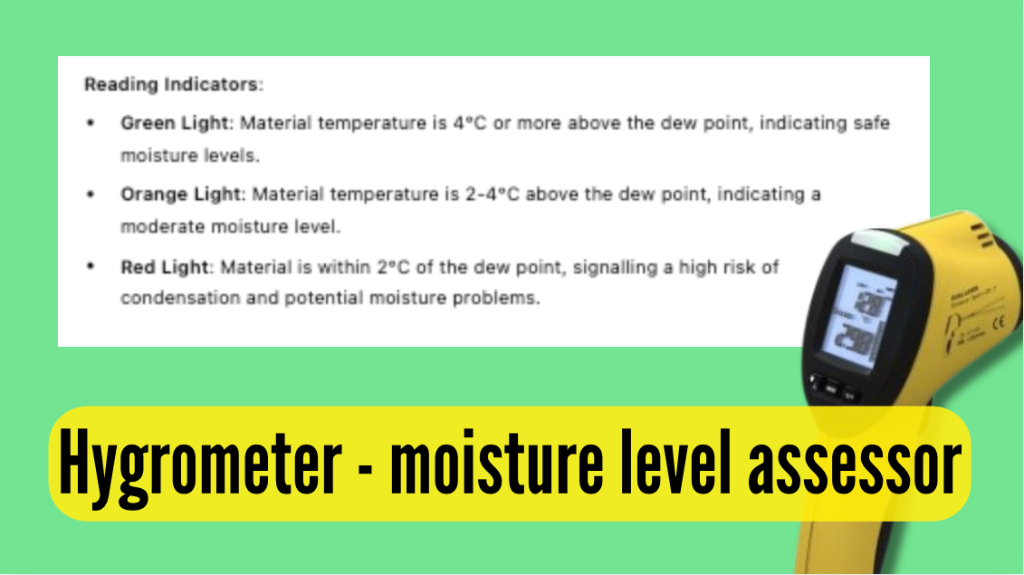
Catch leaks early — before they become structural damage
Elevated readings can indicate water ingress, allowing investigation before rot, mould, or significant repair costs develop.
Validate risk around doors and windows
Joinery and penetrations are common weak points. Measuring across these areas reduces guesswork.
Map moisture patterns (not just single points)
A survey approach creates a clearer story: isolated anomalies vs. consistent elevation that suggests an active pathway.
Improve decision-making and due diligence conditions
If readings are elevated, you can condition the purchase on further testing, repairs, or specialist evaluation.
Provide a defensible baseline for maintenance and future checks
Moisture readings provide a benchmark so future comparisons are meaningful (especially for vendors preparing for sale).
New Zealand residential building failures: 1940s–2020s
Eighty years of risk migrating from one building system to another — and what each decade's failures teach about the next one.
This history is best understood as a story of risk migrating from one building system to another. Early failures centred on toxic materials and inadequate durability. Later problems came from increasingly complex designs, proprietary systems, fragmented responsibility and products whose long-term performance was not yet proven in New Zealand conditions.
"Failed product" needs careful use. Sometimes the material was inherently hazardous, as with asbestos. Sometimes the product physically deteriorated, as with Dux Qest pipe. In other cases — especially monolithic cladding — the material could work, but the entire design, installation and regulatory system failed.
Asbestos and emergency housing materials
Asbestos cement was durable, fire-resistant and economical. New Zealand even mined chrysotile asbestos near Tākaka during the 1940s. Fibrolite roofing and cladding became common — although inhaled asbestos fibres would later be conclusively linked with asbestosis, lung cancer and mesothelioma. Lead paint was widely used on weatherboards, windows and interior surfaces; its principal present-day danger arises when deteriorated paint is sanded, scraped or ingested.
Prediction at the time
Overseas medical evidence was already identifying asbestos disease, but the residential industry did not yet treat installed asbestos cement as a national housing failure.
Mass-produced asbestos products and cold housing
The major failure was not sudden physical collapse. It was the long-term health liability embedded in thousands of homes. Houses were generally structurally simple and weather-tolerant, but frequently cold, damp and uninsulated.
Prediction at the time
Medical warnings around asbestos strengthened internationally. New Zealand nevertheless continued using asbestos products because they appeared exceptionally durable and safe when left intact.
Asbestos peaks and experimental lightweight materials
Particleboard flooring was economical but could swell and lose integrity following prolonged wetting. Early flat roofs and membrane systems demanded maintenance that owners did not always understand.
Prediction at the time
The health case against asbestos was becoming difficult to dispute. New Zealand's commercial asbestos mining ended in 1964, although building-product use continued.
Plumbing plastics, formaldehyde and first-generation insulation
Retrofit insulation became desirable after the oil shocks, but some products introduced chemical exposure, moisture or installation risks. Foil insulation later became particularly dangerous when staples or fixings contacted electrical wiring.
Prediction at the time
By the end of the decade, asbestos, formaldehyde emissions and some early plastic systems were attracting international scrutiny. However, the scale of future remediation was underestimated.
Dux Qest and deferred toxic-material consequences
Dux Qest became one of New Zealand's clearest product-specific residential failures: pipework could look sound externally but eventually split, causing concealed or sudden water damage. Raw blue and brown asbestos imports were banned in 1984, and lead-based household paint had largely been phased out by the early 1980s — but both remained within existing houses, and asbestos-containing residential products continued to be used into the 1990s (MBIE).
Prediction at the time
Direct-fixed claddings and reduced eaves were developing, but the industry had not yet grasped how damaging they could become when combined with complex architecture and low-durability framing.
The foundations of the leaky-building crisis
This was New Zealand's defining residential construction failure. The Building Act 1991 introduced a performance-based regulatory environment, at roughly the same time as Mediterranean-style architecture, complex junctions and lightweight plaster finishes became fashionable. The cladding was often blamed, but the larger failure was the combination:
MBIE says many houses and apartments built from the 1990s to 2005 had inherent design and construction deficiencies, particularly multi-level homes with monolithic cladding and no drainage cavity.
Prediction at the time
Architects, scientists and experienced tradespeople warned that face-sealed walls, limited eaves and untreated framing reduced the margin for error. Those warnings were not converted into sufficiently fast regulatory action.
The leaky-homes scandal becomes public
The 2002 Hunn Report recognised a systemic industry failure. Parliament responded through the Weathertight Homes Resolution Services legislation, while the Building Act 2004 strengthened accountability and regulation. The estimated national remediation liability eventually reached many billions of dollars, and MBIE describes weathertightness as a significant public-policy and regulatory issue throughout the 2000s.
Prediction at the time
Commentators warned that short limitation periods, disappearing defendants and incomplete repairs would leave a second generation of owners carrying losses. That prediction proved substantially correct.
Certification, cladding and contamination scandals
This decade showed that certificates and test results were only as dependable as the evidence behind them, and demonstrated the danger of confusing the presence of a substance with a scientifically established health risk. The Prime Minister's Chief Science Advisor review led to a major retreat from excessive meth-contamination remediation.
Prediction at the time
By the decade's end, litigation over Shadowclad, seismic mesh and leaky-building remediation was still running — years after the original defects.
Supply-chain and compliance risks
The 2022 plasterboard shortage was not a material failure, but a building-product market failure: one supplier controlled over 90% of the domestic plasterboard market, and shortages delayed projects and contributed to builder insolvencies. In response to supply limitations and rapidly rising costs, the Government moved to make recognised overseas products easier to use (2024).
Prediction at the time
Imported systems with unverified local performance remain a live compliance risk as substitution after consent becomes easier.
Predicted next failures
The likely next national problems are not necessarily one notorious branded product. These are risk predictions, not declarations that the products have already failed.
The overall finding
The repeating pattern is not that New Zealand keeps choosing "bad" products. It is that attractive new systems are adopted faster than the industry establishes their long-term compatibility with local climate, workmanship, maintenance and regulatory supervision. A material that survives a laboratory test may still fail as part of a house. The product, design, installer, substrate, flashing, ventilation, owner maintenance and regulatory inspection all form one system. When several small protections are removed at once, an apparently minor defect becomes a national scandal.
Asbestos, Dux Qest and some misleadingly certified products are genuine product-specific failures; leaky homes were predominantly a whole-system failure.
Nearly every decade exchanged proven resilience for some combination of speed, economy, appearance or innovation.
The next major failure is most likely to emerge at the junction between unfamiliar products, complex design, climate exposure and fragmented accountability.
Sources: WorkSafe asbestos information (worksafe.govt.nz); MBIE guidance on contamination in houses and weathertightness history (building.govt.nz); Prime Minister's Chief Science Advisor methamphetamine review (pmcsa.ac.nz, 2022); Reuters report on New Zealand building-product reforms (April 2024). This timeline covers the principal documented residential problems and cannot include every isolated recalled or discontinued product.
Test your understanding of eighty years of building failures
What failed, when it failed, and why — from asbestos to the leaky era to what's predicted next.
The Building-Failures Challenge
15 questions on eighty years of New Zealand building failures — toxic materials, the leaky era, and what fails next.
See how well you really understand moisture sensors
How the meters work — and the things that make them read wet when nothing's wrong.
The Moisture Sensor Challenge
56 questions on how the sensors work — and the things that make them read wet when nothing's wrong.
Sources & standards: BRANZ Bulletins (esp. Measuring Moisture in Timber and Internal Moisture); NZS 3602 Timber Use and NZS 4232.1 moisture guidance; AS/NZS 4354.1 probe method; ASTM D4444 (resistance/capacitance meter use) and ASTM D7438 (hygrometer field use); MBIE / Weathertightness (Hunn Report 2002) and the PwC 2009 weathertightness report cited above; manufacturer calibration data (e.g. Protimeter, Wagner) for penetration depth and tolerance ranges. Conclusions on accuracy and reliance reflect standard industry practice rather than any single instrument's spec sheet.