5 benefits of thermal imaging
Practical, buyer-relevant advantages — focused on risk reduction and decision clarity.
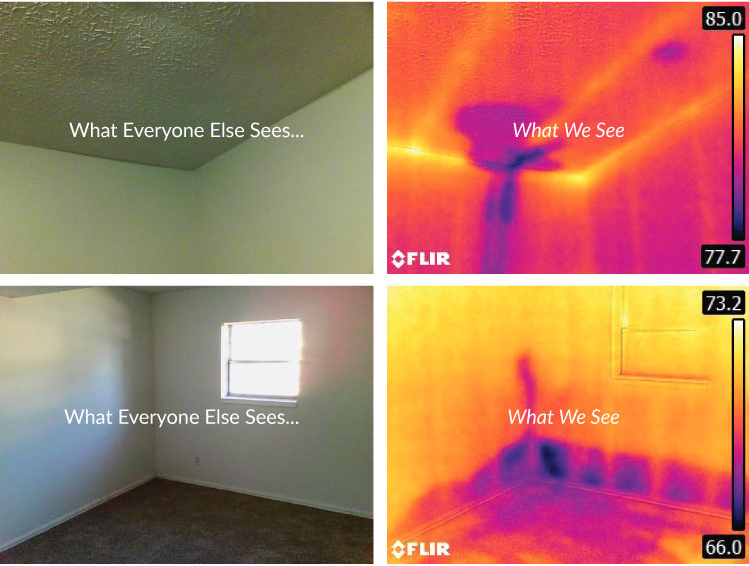
Find hidden issues before they become your problem
Thermal anomalies can surface areas to investigate further, helping you spot likely moisture entry or insulation gaps before purchase decisions are locked in.
Reduce 'unknown unknowns' during negotiation
When you can demonstrate evidence of potential risk areas, you can negotiate repairs, price adjustments, or due-diligence conditions from a stronger position.
Prioritise what matters (fast)
Thermal scanning quickly highlights where to focus attention, saving time on low-risk zones and concentrating on likely problem areas.
Identify insulation, ventilation, and performance issues
Thermal patterns can reveal missing insulation, thermal bridging, and airflow irregularities that impact comfort, mould risk, and running costs.
Improve confidence for both buyers and vendors
For vendors, addressing flagged areas early can reduce deal friction. For buyers, it's another independent layer of verification.
Thermal imaging works best with moisture readings
Thermal data is interpreted in context and paired with moisture measurements and visual inspection for practical conclusions.
Book nowSee how much you really know about thermal imaging
The benefits, what stays hidden without it, and the things people get wrong when reading thermal images.
The Thermal Imaging Challenge
23 questions on the benefits, the hidden story, and the common misreads.